All Categories
Featured


Why Middle East Emerging as Primary Investment Hub?
Table of Contents
In some cases, they have actually sourced items and raw materials needed for important processes from a limited number of nations. A disturbance in the supply chain for transformers, vital for the power sector, can maim electrical power grids and therefore stop everything from the supply of materials to carry systems and factory production.
A toolkit exists to fortify local supply chains. Regional production relies on supply chains durability to grow, however also contributes to durability by minimizing dependence on distant providers.
That requires establishing a nationwide supply chain resilience framework that perfectly integrates with the more comprehensive industrialisation agenda. A collective governance framework involving the public and private sectors in tandem is likewise vital for efficient implementation.
Incentivising and partnering with private entities can foster financial investment in ingenious solutions for supply chain management. Enacting innovative manufacturing policies that promote the adoption of digital tools such as information analytics and expert system can optimise logistics networks, anticipate potential disturbances, and enable more efficient decision-making. The technological transformation goes beyond just data.
Western nations like the United States are already carrying out policies that incentivise the adoption of 3D printing innovations. Studying and adapting these policies for the Middle East can be a valuable action toward constructing a strong supply chain infrastructure in the GCC. The journey to resistant supply chains begins with a shift in frame of mind.
Strategies for Asset Allocation for 2026 World Markets
By executing the techniques described above, the GCC countries can weave a safety net for their financial aspirations. They can double down on increased localisation, fostering domestic production of important items and products. This not only decreases reliance on external providers however also creates tasks and promotes financial growth. A robust and durable supply chain ecosystem will be the foundation of economic diversity, moving national visions for development and success.
The Hidden Risks of Ignoring Sustainable Investment TrendsThe six countries of the Gulf Cooperation Council (GCC)Saudi Arabia, the United Arab Emirates, Qatar, Kuwait, Bahrain, and Omanhave no scarcity of ambition. In the past years, each has revealed ambitious national visions targeted at improving their economies, opening brand-new engines of growth, and positioning themselves as international gamers beyond oil.
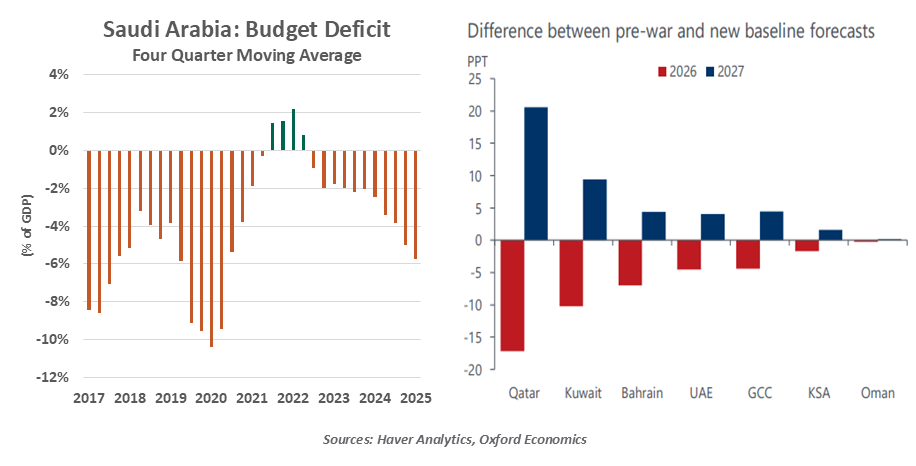
Co-authored by Basheer Salaytah, Task Leader and longtime consultant to governments in the Middle East, and Daniel Bristow, Partner and Head of DA's Middle East Practice, the guide offers a grounded and actionable approach to assist governments deliver outcomes that last. With over 60% of GCC federal government revenues still connected to hydrocarbonsand as the area deals with a growing youth population, volatile international markets, the energy transition, and installing pressure on the standard and generous social well-being modelthe region can not pay for little or symbolic development.
REITs vs. Physical Property: Which Is Better for 2026?Significantly, these methods use worth beyond the GCC, with actionable advice relevant to other resource-dependent economies all over the world. The guide's premise is easy: If economic diversification is to be successful, it must move quicker from ambition to outcomes. The publication stands out not for presenting unique financial theory, however for insisting that success is less about what a nation picks to do, and more about how rigorously it follows through.
Brunei's decision to focus reform efforts on just 2 prioritiesEase of Working and primary educationresulted in remarkable enhancements. Qatar's $1B Fund of Funds initiative, used to build a local equity capital ecosystem in Doha, is highlighted as a model for directing financial investment into top priority sectors like technology and healthcare.
Why the Middle East Emerging as Global Industrial Powerhouse?
What gives the guide its weight is not only the useful experience behind itSalaytah assisted develop the Middle East's first Shipment Unit in Jordan and similar systems in Saudi Arabia and Qatarbut likewise its timing. Worldwide economic conditions have made diversity not only more urgent, however likewise more tough. As energy markets vary and geopolitical stress rise, the expense of hold-up boosts.
Whether GCC governments can move toward private sector-led growth, and do so at scale, remains a challenge. But as the guide explains, the path forward needs more than big ideas. It requires what the authors call "ruthless, disciplined shipment."This is not a silver bullet. The downloadable guide below does not assure improvement.

Oct 2019 Walid Majdalani, Head of Investcorp Private Equity MENA business, describes the appealing opportunities of purchasing GCC Facilities, driven by the region's growth and government efforts.
Top Foreign Capital Opportunities across GCC Economy
Diversity is accomplish a balanced economy,, Diversification visions and techniques exist. There were and The, by creating an index with no qualitative/perceptions indications. The overall Global EDI is made up of tracking. As commodity exporters diversify, lower their reliance on resource leas and possibly score a higher rating on the EDI.
For non-diversified countries, when price of the commodity falls, there is a substantial decline in federal government earnings, public spending, bank account balance and global reserves: more volatility. The (including major product exporters, not restricted to simply oil) over the, across 25 indications (including 3 digital signs). North America, Western Europe and East Asia Pacific countries top EDI scores throughout the years.
Although structural reforms and diversification efforts undertaken by the GCC affected MENA's regional ratings positively, it still lags 5 other regional groups., with the top 10 countries having less than a 10-point distinction in ratings (implying the strength of diversity)., along with 4 upper-middle earnings (China, Mexico, Turkey and Thailand) and one lower middle-income country (India, ranked 20th, driven by its services export boom).
Among the e. countries ranked 51 to 70, the performance of Moldova, Indonesia, Armenia and Honduras stand apart (when comparing 2024 vs 2000). years, given accelerated diversification plans of lots of oil-exporting nations. posted a steady improvement due to a combination of minimized dependence on fuel exports, lowered exports concentration and a modification in the structure of exports.
with oil exporters having the lowest scores (though individual country-specific performance has actually varied in time). Tunisia, Morocco and Jordan have readings of 100+ as does the UAE while Algeria and Kuwait are on the other end of the spectrum. Throughout all areas, the median rating is the for both 2000 and 2024, and the highest in The United States and Canada.
Upcoming Middle East Investment Trends for 2026 World Markets
In 2024, the (China was among the top ranked, while Mongolia's score got worse compared to 2000)., but more to do with a "levelling up" at the bottom instead of an improvement amongst the leading nations. By comparing the (height of the blue box), least variability is seen in South Asia in 2000 and the most in the MENA region (with difference likely driven by the dichotomy within the region between the resource-heavy states (e.g.

Latest Posts
Why Economic Diversification Can Shape Arabian Markets
Roadmap to Gulf Stock Equity Trends in 2026
Future-Proofing Regional Portfolios for 2026 Shifts